The Best Of The Internets

The Power of ‘No’ in Internet Standards

This is an important piece about where power actually lives on the web: not in the specification itself, but in whether powerful players choose to participate, implement, and ship.

I also appreciate Mark’s call for more ambition here. Too often, we talk about the web as if it’s destined to be an OS for web apps rather than a public-interest platform in its own right. That’s not inevitable. But getting somewhere better requires recognizing that refusal, delay, and strategic disinterest can be every bit as consequential as formal opposition.


Nice Select

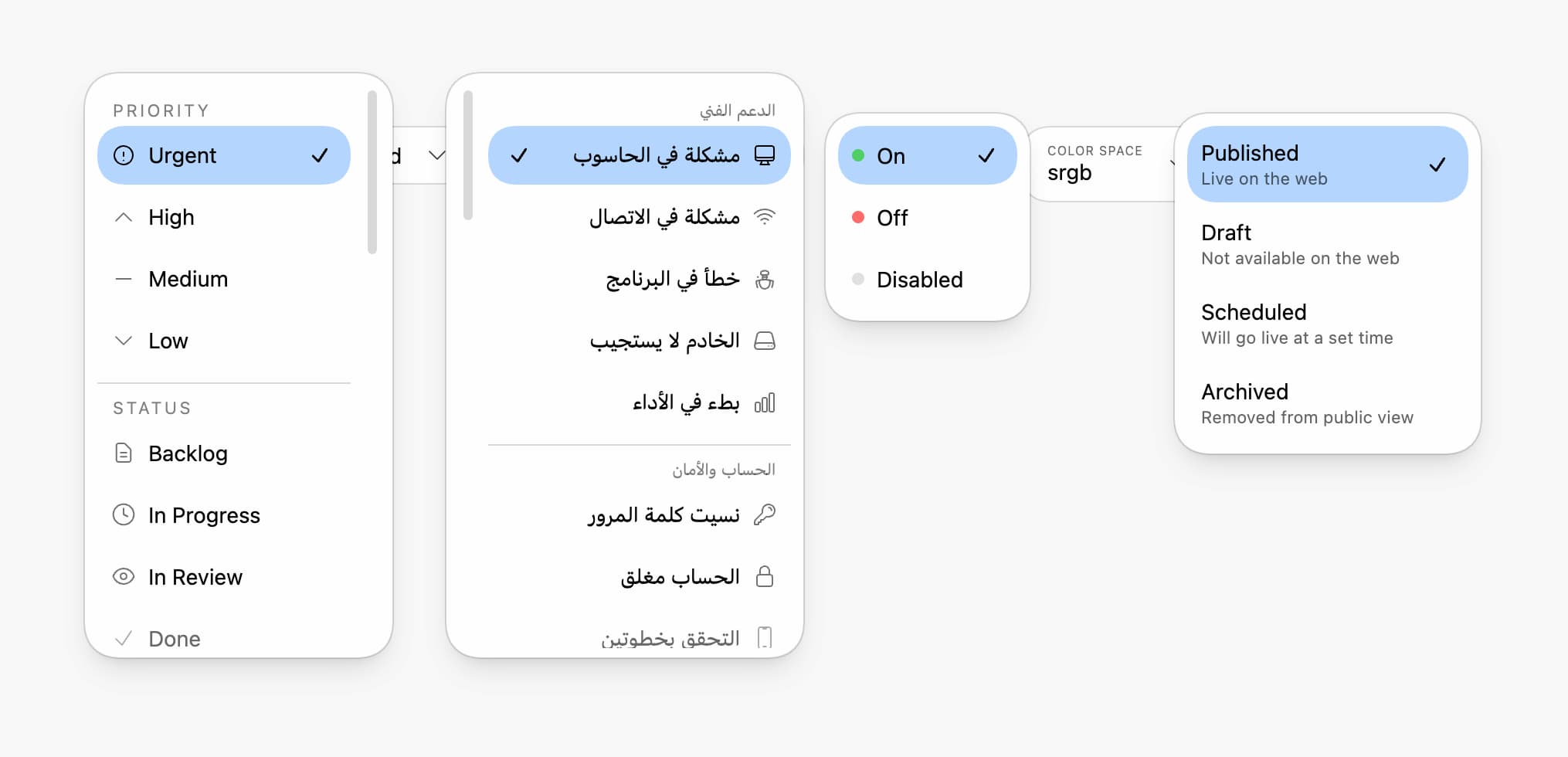
This is a terrific demonstration of how far the platform has come: a richly styled <select> that leans on native semantics, native accessibility, and progressive enhancement instead of fighting the browser.

What I especially appreciate here is the restraint. Yes, there’s some clever CSS and a little JavaScript to help with positioning, but the whole thing is built on top of the platform, not in spite of it. That’s the interesting takeaway for me: we can build interfaces that feel bespoke without throwing away the reliability and accessibility native controls already give us.


Some blind fans to experience Super Bowl with tactile device that tracks ball

A few years ago, a couple students at the University of Washington asked me to come to their campus for a visit. They gave me a demo of an early prototype they’d been working on — a haptic feedback device that could allow someone who is Blind or low vision to follow a game. The demo took video data from a tennis match and mapped it onto the haptic tablet. It felt like Pong, but they had a bolder vision — tackling fast-moving and complicated sports like basketball, football, American football, and hockey.

I immediately invited them to pitch us for the AI for Accessibility Grant Program that I ran for Microsoft. With so much focus on assistive technology to enable folks to work and accomplish common life tasks, I loved that the OneCourt team was interested in enabling people with disabilities to enjoy leisure activities like sporting events. Moreover, I saw the potential to enable Blind and low-vision parents to experience their kids’ sporting events, which could be life-changing for them.

Needless to say, they wowed both me and the rest of the seleciton committee. We funded them to expand their prototypes and pursue partnerships with different professional sports leagues, teams, and venues. They were ambitious and it’s paying off.

Fast forward a few years and they’re enabling a handful of Blind & low vision sports fans to exerience the Super Bowl in a whole new way, using their technology. It’s amazing and I could not be more proud of them.

Congrats y’all!


Forrester Research: As technology has evolved, so has the need for accessibility

A recent paper from Forrester (commissioned by Microsoft, my employer), has confirmed my anedotal experiences are not outliers:

This new study, based on a 2025 online survey of 3,901 US consumers, confirms what many of us know: accessible technology empowers everyone. And with the rise of AI, we’re entering a new era of possibility. 

One of the stats that’s likely to be surprising to many people is that people who identify as having disabilities and those who don’t both use assistive technology features at nearly the same rate.

Full details of the research report are here: Oh, The Things We Can Do Together — How Assistive Technology Is Unlocking Human Potential In The Era Of AI


Creating a more accessible web with ARIA Notify

I just saw this very exciting announcement on the Edge Dev Blog:

ARIA Notify is an ergonomic and predictable way to tell assistive technologies (ATs), such as screen readers, exactly what to announce to users and when.

In its simplest form, developers can call the ariaNotify() method with the text to be announced to the user.

Here’s what it looks like:

// Dispatch a normal priority notification
document.ariaNotify("Background task completed", { priority: "normal" });

I’m particularly excited by this because of how much it simplifies the update process for engineers. Previously they needed to manage upates to an aria-live DOM node with the appropriate announcement level and hope for the best. This approach was plagued with issues ranging from lag — because, DOM manipulation — to confusion between whether “polite” or “assertive” was the right choice.

The ARIA Notify proposal is clear, concise, and far more likely to get used and — more importantly — used properly.

It’s currently in Origin Trial. Please give your feedback so we can get this into every browser sooner rather than later.


Default Isn’t Design

When one approach becomes “how things are done,” we unconsciously defend it even when standards would give us a healthier, more interoperable ecosystem. Psychologists call this reflex System Justification. Naming it helps us steer toward a standards-first future without turning the discussion into a framework war.

This whole piece is an excellent discussion about how tools can become an identity and why that’s a bad thing.


Designing for Distress: Understanding Users in Crisis

In a distressing moment, it’s like you’re rushing to the airport — you’re just looking for help right now. When you aren’t distressed, it’s like you’re on vacation. You can take your time, you’re more open to exploring.

In a recent study, the VA learned a lot from users navigating acute distress — and why typical UX patterns fail. This is highly recommended reading for anyone working in the design space.


Why I’m Betting Against AI Agents in 2025 (Despite Building Them)

I think it’s really key to understand what AI is good for and where it falls short. Not just in terms of results, but in terms of externalities as well.

To that end, this is a piece worth reading. To me, the golden nugget is this (when discussing who will succeed with AI agents):

[T]he winners will be teams building constrained, domain-specific tools that use AI for the hard parts while maintaining human control or strict boundaries over critical decisions. Think less “autonomous everything” and more “extremely capable assistants with clear boundaries.”